

From EPA and DHA to absorption and emerging research, here’s what matters when choosing an omega-3 supplement.
Omega-3 supplements are everywhere. Walk into almost any pharmacy or browse online, and you’ll find dozens of fish oil products promising support for your heart, brain, and overall wellness.
But are all fish oils essentially the same?
Not necessarily.
While EPA and DHA are two of the most important omega-3 fatty acids, there’s more to understand than the numbers on a supplement label. The type of omega-3s, their chemical form, the amount you take, and the quality of the product can all matter.
In this guide, we’ll explore the science behind omega-3s, what makes fish oil supplements different, and why researchers are investigating combinations of fish oil and botanical ingredients.
We’ll also look at doTERRA’s EO Mega+, a fish oil supplement formulated with Wild Orange essential oil, as an example of how supplement formulations are evolving.
1. Understanding Omega-3s: More Than Just Fish Oil
Omega-3s are a family of polyunsaturated fatty acids involved in important functions throughout the body.
They contribute to cell membrane structure, and certain omega-3s are especially important for brain and eye development. Omega-3 intake is also relevant to cardiovascular health.
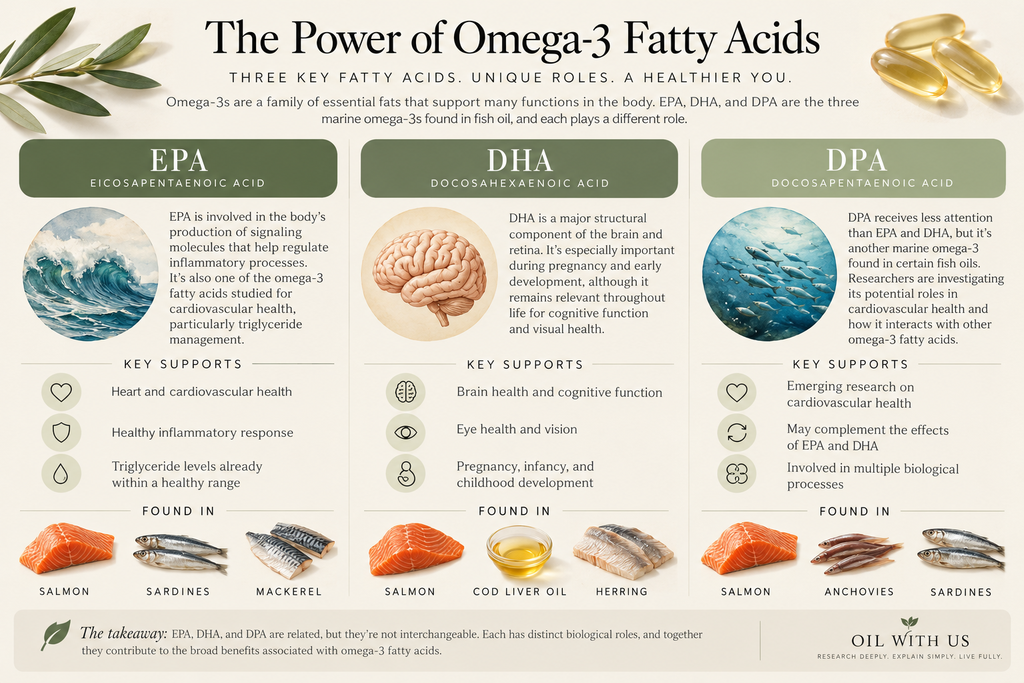
Three omega-3s are particularly worth knowing:
EPA: Eicosapentaenoic Acid
EPA is involved in the body’s production of signaling molecules that help regulate inflammatory processes.
It’s also one of the omega-3 fatty acids studied for cardiovascular health, particularly triglyceride management.
DHA: Docosahexaenoic Acid
DHA is a major structural component of the brain and retina.
It’s particularly important during pregnancy and early development, although it remains relevant throughout life.
DPA: Docosapentaenoic Acid
DPA receives less attention than EPA and DHA, but it’s another marine omega-3 found in certain fish oils.
Researchers are investigating its potential roles in cardiovascular health and how it interacts with other omega-3 fatty acids.
The takeaway: EPA, DHA, and DPA are related, but they’re not interchangeable. Each has distinct biological roles.
What about omega-7, omega-9, and omega-11?
Some marine oils contain additional fatty acids beyond the familiar omega-3s.
For example:
- Omega-7: Includes palmitoleic acid, which is being studied in relation to metabolism.
- Omega-9: Includes oleic acid, a monounsaturated fat also found abundantly in olive oil.
- Omega-11: Includes less commonly discussed fatty acids such as cetoleic acid, found in certain marine oils.
These additional fats contribute to a product’s overall fatty acid profile.
However, the presence of more types of fatty acids doesn’t automatically mean a supplement provides greater health benefits. The amounts, biological effects, and supporting clinical evidence still matter.
2. Why Fish Oil Quality and Absorption Matter
Two fish oil supplements may list similar amounts of EPA and DHA while differing in other important ways.
One difference is the chemical form in which the omega-3s are delivered.
Triglycerides: The Natural Form of Fat
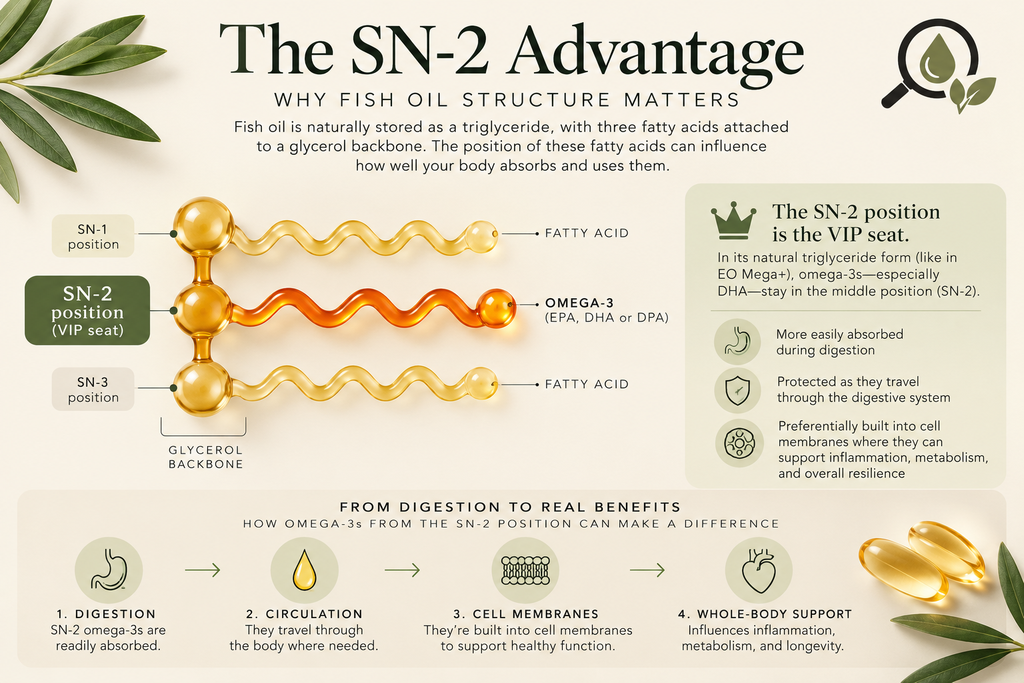
In fish, omega-3 fatty acids are commonly stored as triglycerides.
Imagine a triglyceride as a small structure with three positions where fatty acids can attach.
The middle position is called SN-2.
The placement of fatty acids within this structure can influence how digestive enzymes process fats and how the body absorbs them.
This is one of the ideas discussed in doTERRA’s EO Mega+ research presentation.
Does the SN-2 position make fish oil better?
It’s an interesting area of lipid science.
Some studies suggest that triglyceride structure and fatty acid positioning can affect digestion and absorption under particular conditions.
However, it’s important to distinguish between a plausible biological mechanism and a demonstrated clinical advantage.
We cannot conclude that a product provides better long-term health outcomes simply because it emphasizes the SN-2 position.
To establish that, researchers would need appropriate comparative studies measuring absorption and meaningful health outcomes.
Other factors worth checking
When evaluating a fish oil supplement, consider:
- EPA and DHA per serving: Look at the actual amounts, not just the total fish oil weight.
- Purity: Check whether the manufacturer tests for contaminants such as heavy metals and persistent pollutants.
- Freshness: Fish oil can oxidize, making handling, storage, and quality control important.
- Formulation: Products may use triglyceride, re-esterified triglyceride, ethyl ester, or other forms.
- Independent testing: Third-party verification can provide additional confidence in product quality.
The best choice isn’t necessarily the supplement with the longest ingredient list or the highest advertised concentration.
It’s one that provides an appropriate dose, reliable quality, and evidence relevant to your needs.
3. Introducing EO Mega+: A Different Approach to Fish Oil
One example of a more complex omega supplement is EO Mega+ from doTERRA.
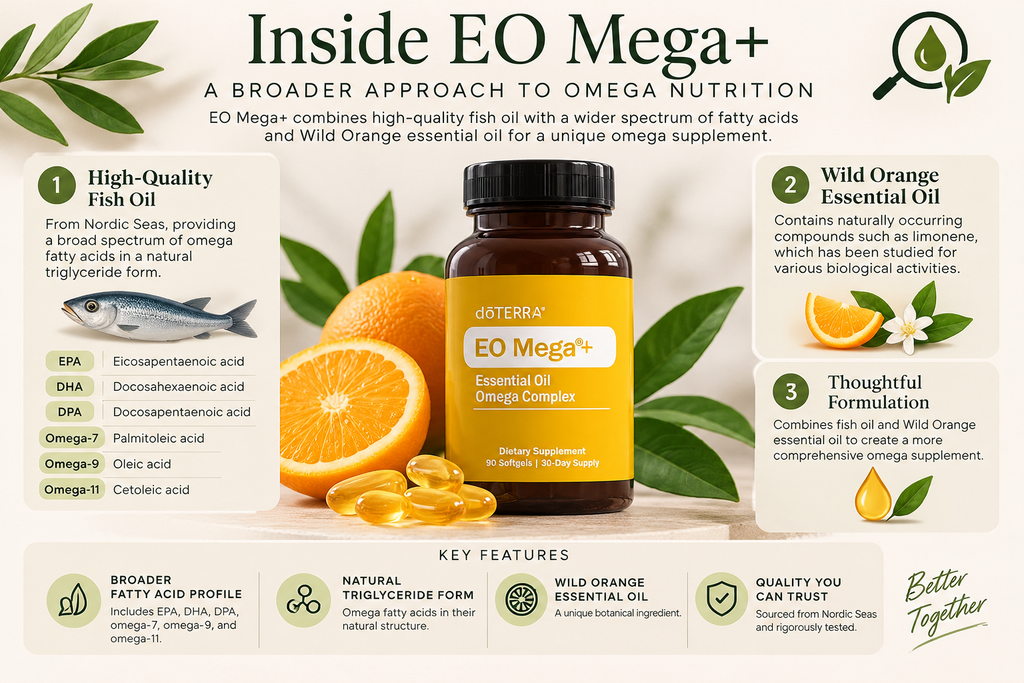
According to the company’s educational presentation, EO Mega+ combines Nordic Seas fish oil with a broader spectrum of fatty acids and Wild Orange essential oil.
The formulation emphasizes three features:
A broader fatty acid profile
In addition to EPA and DHA, the presentation highlights DPA, oleic acid, palmitoleic acid, and cetoleic acid.
These fatty acids are interesting because they participate in different biological processes.
However, whether this particular combination produces better health outcomes than other high-quality omega-3 supplements requires direct comparative evidence.
Triglyceride structure
doTERRA emphasizes the natural triglyceride structure of its fish oil and the positioning of omega-3 fatty acids.
As discussed earlier, molecular structure can influence fat digestion and absorption.
The practical question is whether those differences translate into measurable benefits for people taking the product.
Wild Orange essential oil
Perhaps the most distinctive feature is the inclusion of Wild Orange essential oil.
Wild Orange contains compounds such as limonene, which researchers have investigated for various biological activities.
But why combine an essential oil with fish oil?
That brings us to the research discussed in doTERRA’s presentation.
4. What Does the Research Say About EO Mega+?
During a doTERRA educational presentation, researchers described findings involving fish oil combined with Wild Orange essential oil.
Two areas stood out: cardiovascular measurements and gene expression.
Heart Rate and Blood Pressure
The presentation reported that participants taking EO Mega+ experienced changes including:
- Approximately 4 fewer resting heartbeats per minute.
- Approximately 6 mmHg lower diastolic blood pressure.
These are potentially interesting observations.
However, before interpreting them as proven benefits, we need to know more about the study.
Important questions include:
- How many participants were involved?
- Was there a placebo or comparison group?
- How long did the study last?
- Were the differences statistically and clinically meaningful?
- Were the results published and independently reviewed?
The presentation highlights some encouraging findings, although additional details about the study would help us better understand their significance.
The takeaway: These results offer an interesting starting point for further research into EO Mega+. While promising, more research would help clarify how these findings translate into long-term cardiovascular health benefits.
The Gene Expression Findings
The presentation also described research exploring whether adding Wild Orange essential oil influenced gene expression.
Gene expression refers to the process by which cells use genetic instructions to produce functional molecules, including proteins.
According to the presentation:
- Fish oil alone was associated with changes in 33 genes.
- Fish oil combined with Wild Orange was associated with changes in 978 genes.
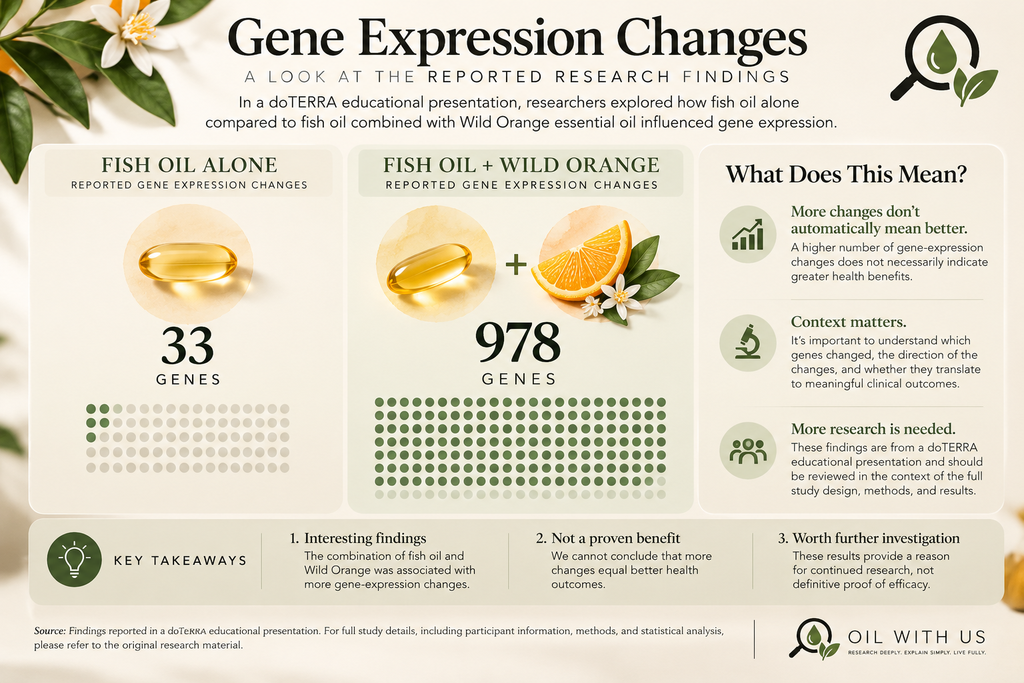
That’s a striking difference in the number of genes reported.
But what can we learn from these findings?
The number of gene-expression changes is intriguing, but understanding their significance is just as important.
Different genes play different roles in the body, and researchers are interested in understanding which genes were affected, how they responded, and what those changes might mean for overall health.
These findings open the door to exciting questions about how Wild Orange essential oil may interact with fish oil. Further research will help us better understand the potential benefits of this combination and how they may translate into everyday wellness.
5. Watch the Full EO Mega+ Explanation
Want to explore the presentation in more detail?
In the video, “EO Mega+ Explained: Why This Isn’t Ordinary Fish Oil,” we walk through the research presented by doTERRA, including fatty acid diversity, triglyceride structure, cardiovascular measurements, and gene-expression findings.
The video provides the full context behind the company’s presentation. The discussion in this article helps distinguish the research findings from conclusions that still need further verification.
6. How to Choose an Omega-3 Supplement
You don’t need to become an expert in lipid biochemistry to make a more informed decision.
Start with a few practical questions.
Am I getting enough omega-3s from food?
Fatty fish such as salmon, sardines, herring, and mackerel are sources of EPA and DHA.
For many people, including seafood regularly is a practical way to obtain these nutrients.
People who don’t eat fish may consider other sources, including algae-derived omega-3 supplements.
How much EPA and DHA does the product provide?
A bottle may advertise 1,000 mg of fish oil without providing 1,000 mg of EPA and DHA.
Always check the Supplement Facts panel for the actual amounts.
The appropriate intake depends on your diet, age, health circumstances, and reason for considering supplementation.
Has the product been tested?
Look for transparent information about contaminants, oxidation, ingredient identity, and manufacturing quality.
What evidence supports its special features?
If a product advertises superior absorption, unique fatty acids, or added botanical ingredients, ask whether those features have been studied in people.
A distinctive formulation can be interesting without necessarily being clinically superior.
Is it appropriate for me?
Omega-3 supplements can be a convenient way to complement your diet, particularly if you don’t regularly eat fatty fish.
As with any supplement, individual needs vary. If you’re taking medications, managing a medical condition, or have questions about supplementation, it’s worth speaking with your healthcare professional.
7. The Bigger Picture: Why EO Mega+ Stands Out
By now, you’ve probably realized that there’s more to fish oil than simply looking at the amount of omega-3s on the label.
EPA and DHA are important, but the broader fatty acid profile, triglyceride structure, ingredient quality, and formulation are also worth considering.
This is what makes EO Mega+ particularly interesting to us.
Rather than focusing exclusively on EPA and DHA, doTERRA has developed a formulation that brings together a broader range of marine fatty acids, triglyceride structure, and Wild Orange essential oil.
We especially appreciate the thought behind combining these ingredients—and the research exploring how they may work together.
The reported cardiovascular and gene-expression findings are intriguing. While there’s still more to learn about their long-term significance, they give us additional reasons to be interested in the formulation and the science behind it.
For us, EO Mega+ represents a thoughtful approach to omega-3 supplementation. It’s not simply about getting more fish oil. It’s about looking at the ingredients, how they’re formulated, and the research questions that make the product distinctive.
We also believe that daily supplementation can play an important role in foundational wellness. Given the realities of modern diets and what many people typically consume, it can be challenging to consistently obtain optimal amounts of certain nutrients through food alone. While whole foods should always be the foundation, we see quality supplements like EO Mega+ as a practical way to help fill nutritional gaps and support long-term wellness, particularly for those who don’t regularly eat omega-3-rich fish.
Let’s Keep Learning Together
Before reading this article, what did you usually look for when choosing fish oil?
Was it the brand, the amount of omega-3s, the price, or something else?
We’d love to hear what matters most to you.
And if you know someone comparing omega-3 supplements, consider sharing this guide with them.