

Four Everyday Foundations for Long-Term Health
Why Wait Until Something Goes Wrong?
We regularly maintain the things we depend on.
We change the oil in our cars, replace worn tires, service our appliances, and take care of our homes. We understand that regular maintenance can help prevent avoidable problems and keep things working properly.
But when it comes to our own health, it’s easy to wait until something goes wrong before giving it our attention.
Maybe we start eating better after receiving concerning lab results. We begin exercising when we notice our physical abilities declining. Or we finally prioritize sleep when exhaustion becomes impossible to ignore.
What if we approached our health differently?
What if caring for our bodies became part of everyday life, long before a problem demanded our attention?
This is the idea behind Foundation Before Fix.
It’s about investing in the habits that support our health today, rather than focusing only on addressing problems when they arise.
Of course, even the healthiest lifestyle cannot prevent every illness. Genetics, aging, environmental factors, and circumstances beyond our control all influence our health.
But many health risks are modifiable, and the choices we make consistently can have a meaningful impact on our long-term well-being.
The goal isn’t perfection. It’s giving our bodies the ongoing care they need to function well.
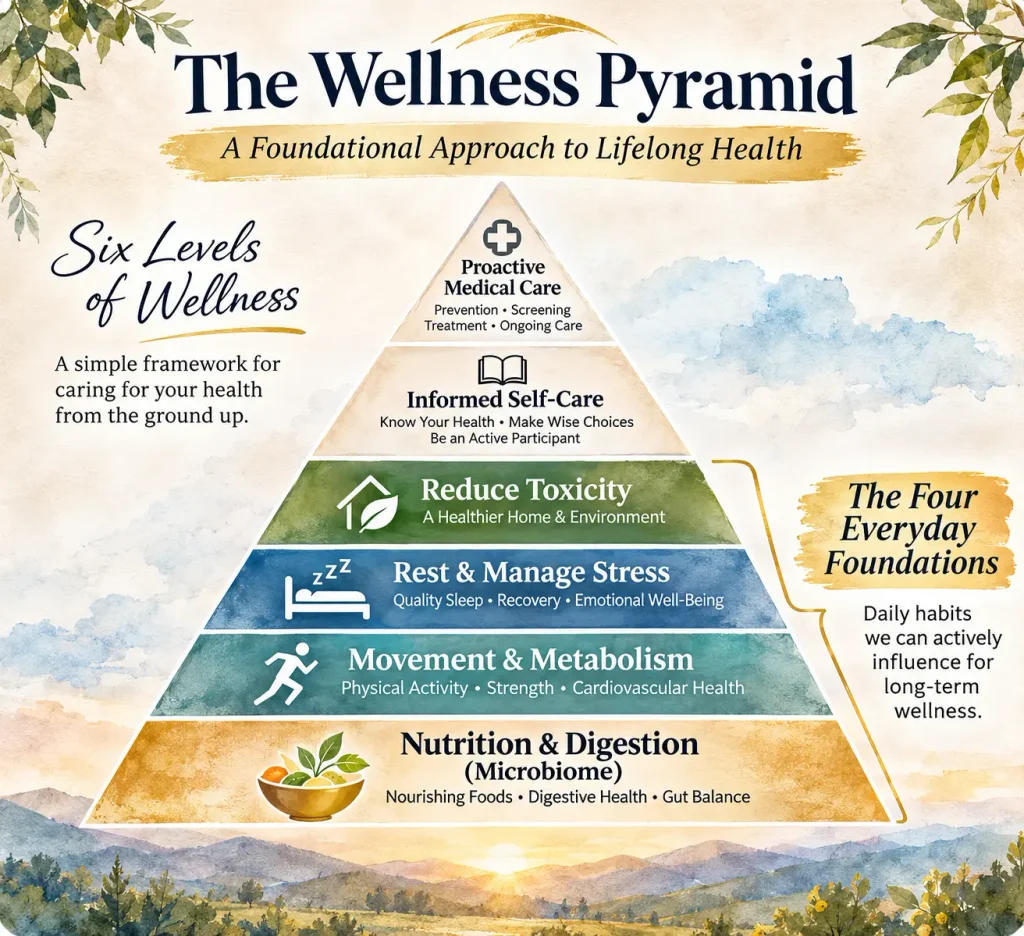
The Wellness Pyramid: Four Everyday Foundations
In our article What Is Foundational Wellness?, we introduced the Wellness Pyramid as a way to understand the different areas that contribute to our health.
While the complete pyramid includes six levels, its first four focus on everyday habits that we can actively influence:
- Nutrition & Digestion (Microbiome) — Nourishing our bodies with the nutrients they need.
- Movement & Metabolism — Maintaining strength, cardiovascular fitness, and physical function.
- Rest & Manage Stress — Prioritizing quality sleep, recovery, and emotional well-being.
- Reduce Toxicity — Making thoughtful choices to reduce unnecessary environmental exposures.
These foundations are interconnected. Each contributes something important, and no single foundation can completely replace the others.
Let’s explore what these foundations look like in everyday life.
Nutrition & Digestion: Nourish Your Body
Nutrition can be confusing. One diet tells us to eat more meat, another encourages us to avoid it. Some emphasize carbohydrates, while others recommend limiting them. With so many trends and conflicting opinions, it’s easy to lose sight of what matters most.
We believe nutrition doesn’t have to begin with a complicated set of rules.
Eat real food. Seek variety. Nourish your body.
Different foods provide different nutrients. Meat, fish, and eggs offer valuable protein, vitamins, and minerals. Vegetables, fruits, legumes, nuts, and whole grains contribute fiber, micronutrients, and beneficial plant compounds. Together, these foods can help us build a more nourishing diet.
We also shouldn’t overlook digestion and the gut microbiome. Fiber-rich foods do more than support regularity. Certain fibers nourish beneficial gut microorganisms, which play important roles in digestive and metabolic health.
One practical habit is preparing more meals from whole or minimally processed ingredients. Cooking at home gives us greater control over what goes into our food, but it’s not the only option. Restaurants and meal-prep services that prioritize quality ingredients and balanced meals can support the same philosophy.
This doesn’t mean every packaged or processed food is unhealthy. Frozen vegetables, canned beans, yogurt, and other convenient foods can be nutritious choices, too.
The goal isn’t dietary perfection or following the latest trend. It’s consistently choosing foods that provide the nourishment our bodies need.
Foundation Before Fix means making nutrition a daily investment in our health, not simply changing how we eat when a problem arises.
Movement & Metabolism: Keep Your Body Moving
Our bodies are designed to move. Yet when we think about exercise, we often associate it with losing weight, burning calories, or changing how we look.
But movement is about much more than appearance.
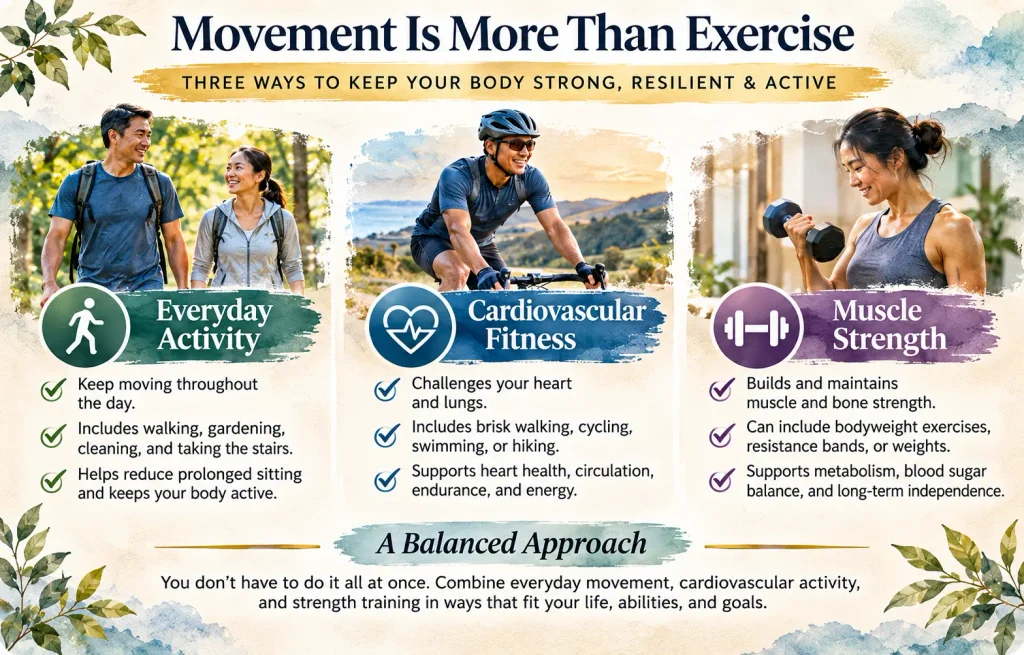
Regular physical activity supports cardiovascular health, helps regulate blood sugar, maintains muscle and bone strength, and contributes to better mobility, balance, and mental well-being.
Muscle is more than strength. Skeletal muscle plays an important role in how our bodies use glucose and manage energy. Maintaining muscle as we age helps preserve our ability to remain active and independent.
Cardiovascular fitness matters beyond weight loss. Activities that challenge our heart and lungs, such as brisk walking, cycling, or swimming, can improve cardiovascular health even when the number on the scale doesn’t change.
It’s also helpful to distinguish between physical activity and exercise. Physical activity includes everyday movement such as walking, gardening, cleaning, and taking the stairs. Exercise is more structured and intentional, such as strength training, cycling, or following a fitness routine.
Both are valuable. Everyday movement helps reduce prolonged inactivity, while intentional exercise allows us to develop cardiovascular fitness, strength, and endurance.
And we don’t all have to start at the same place. Our age, physical abilities, health, and circumstances influence what movement looks like for each of us.
The goal isn’t to become an athlete or follow an intense fitness program. It’s to find enjoyable, sustainable ways to stay active while gradually building and maintaining our physical capabilities.
Foundation Before Fix means moving our bodies today to help preserve what they’re capable of doing tomorrow.
Rest & Manage Stress: Give Your Body Time to Recover
Of all the foundations of wellness, rest might seem like the easiest. After all, what could be simpler than sleeping?
Yet in a world that celebrates productivity, busy schedules, and constant activity, rest can become one of the easiest things to neglect.
According to the CDC, 30.5% of American adults reported getting fewer than seven hours of sleep per day in 2024. And only about 55% reported waking up feeling well-rested most days or every day.
Rest doesn’t always happen simply because we stop moving. We have to be intentional about it.
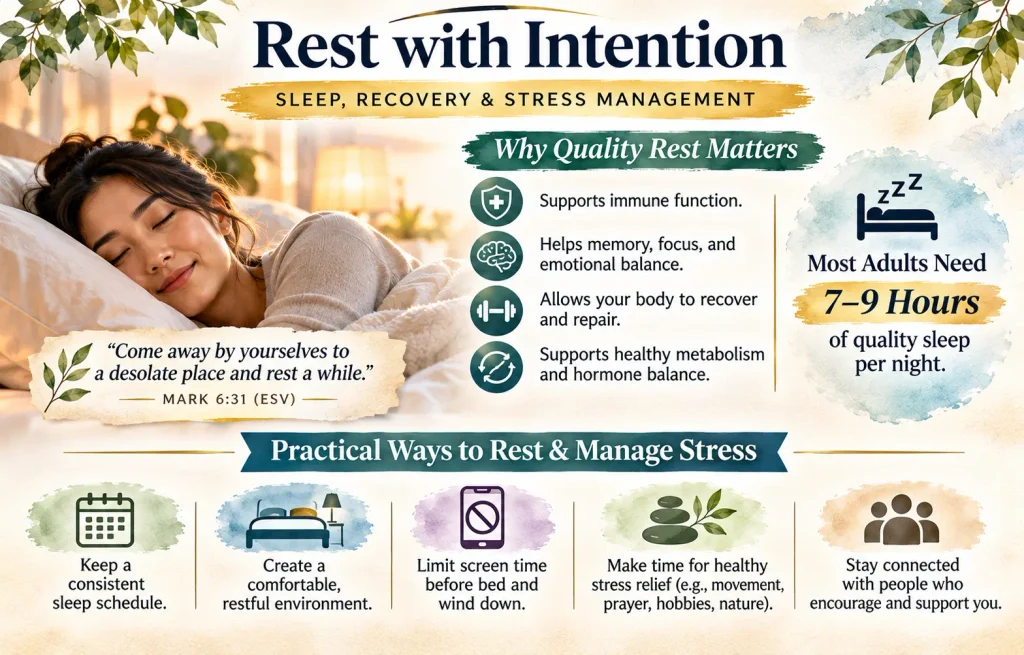
Sleep plays an essential role in physical recovery, memory, emotional regulation, immune function, and metabolic health. Most adults need approximately seven to nine hours of sleep, but quality matters alongside quantity.
Spending eight hours in bed doesn’t necessarily mean getting eight hours of restorative sleep. Frequent interruptions, inconsistent sleep schedules, and poor sleep habits can affect how rested we feel.
This is why healthy sleep deserves the same attention we give to nutrition and exercise. Establishing consistent sleep and wake times, creating a comfortable sleeping environment, and allowing ourselves time to wind down are simple ways to prioritize recovery.
Stress management is equally important. While short-term stress is a normal part of life, persistent stress without adequate recovery can affect our sleep, mood, concentration, and physical well-being.
Managing stress doesn’t mean avoiding every challenge. It means making room for healthy ways to recover, whether through physical activity, meaningful relationships, prayer, personal reflection, hobbies, or quiet moments away from our responsibilities.
Even Scripture reminds us of the importance of rest. In Mark 6:31, Jesus told His disciples:
“Come away by yourselves to a desolate place and rest a while.” — Mark 6:31 (ESV)
Even while doing meaningful work, the disciples needed time to step away and recover.
Rest isn’t laziness, and it isn’t something we earn only after finishing everything else. It’s something our bodies need to function well.
Foundation Before Fix means making quality rest and stress management intentional parts of everyday life, rather than waiting until exhaustion forces us to stop.
Reduce Toxicity: Make Thoughtful Everyday Choices
Every day, we interact with our environment through the air we breathe, the water we drink, the food we eat, and the products we use in our homes.
While our bodies have natural systems that process and eliminate many substances, environmental exposures can still influence our health. Some exposures are unavoidable, but others can be reduced through simple, intentional choices.
Reducing toxicity isn’t about living in fear or creating a perfectly chemical-free home. It’s about reducing unnecessary exposures where we reasonably can.
For example, improving indoor ventilation, avoiding tobacco smoke, using household cleaning products according to their instructions, and being mindful of air quality are practical ways to create a healthier living environment.
Another approach is to gradually replace products containing substances of concern with safer alternatives. Certain PFAS, sometimes called forever chemicals, have raised health and environmental concerns because of their persistence and potential effects on human health. Choosing products without intentionally added PFAS, when practical, is one example of reducing avoidable exposure.
We can apply the same thoughtful approach to household cleaners, cookware, personal care products, and other everyday items. Sometimes a simpler formulation or a well-chosen natural alternative can meet our needs without unnecessary ingredients.
However, natural doesn’t automatically mean safe, just as synthetic doesn’t automatically mean harmful. What matters is the substance, the amount, the route of exposure, and how frequently we’re exposed.
A healthier home doesn’t have to be an expensive one, either. We don’t need to replace everything overnight. Small, informed changes over time can help us create a healthier living environment.
Foundation Before Fix means creating an environment that supports our health while reducing avoidable risks—one thoughtful choice at a time.
How the Four Foundations Work Together
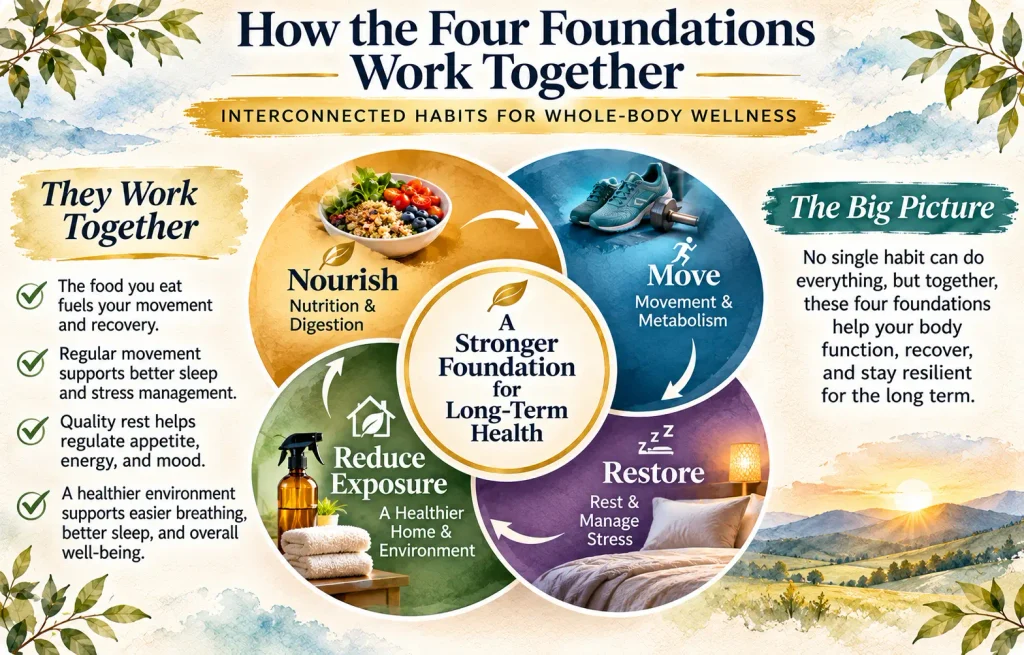
Nutrition, movement, rest, and our environment may seem like separate areas of wellness, but they’re closely connected.
What we eat provides the energy and nutrients our bodies need to move, recover, and function. Regular physical activity supports cardiovascular and metabolic health, while also contributing to better sleep and stress management.
Quality sleep, in turn, helps regulate appetite, energy, mood, and recovery, making it easier to maintain healthy habits throughout the day.
And the environments we spend time in can either support or challenge our well-being, influencing everything from sleep quality to respiratory health.
Each foundation supports the others.
Think of our bodies as complex systems that require ongoing care. Just as maintaining a vehicle involves more than changing its oil, maintaining our health involves more than eating well, exercising, or taking supplements alone.
A nutritious diet cannot fully compensate for chronic sleep deprivation. Regular exercise doesn’t eliminate the risks of smoking. And supplements cannot replace the benefits of healthy lifestyle habits.
The goal isn’t to perfect every area of our lives. It’s to recognize how these everyday choices work together and make gradual improvements where we can.
Foundation Before Fix is about caring for the whole system, not chasing individual problems as they arise.
Informed Self-Care & Proactive Medical Care: Know Your Health
Building a strong foundation for wellness doesn’t mean we can prevent every illness or eliminate the need for medical care. But it can help reduce our risk of many preventable health problems.
Think about maintaining a car. Regular oil changes, proper tire pressure, and routine maintenance don’t guarantee that something will never break down. But they help the vehicle run efficiently, reduce unnecessary wear, and lower the likelihood of avoidable problems.
Our bodies are far more complex, but the principle of ongoing care still applies.
Consistent nutrition, physical activity, quality sleep, and a healthier environment can help maintain normal bodily functions and reduce the risk of certain chronic conditions, including cardiovascular disease and type 2 diabetes.
Rather than waiting until something goes wrong, we can invest in the habits that help keep our bodies functioning well.
But even a well-maintained car needs inspections—and sometimes repairs.
That’s why the final two levels of our Wellness Pyramid are Informed Self-Care and Proactive Medical Care.
Informed self-care means taking an active role in understanding our health. It includes paying attention to changes in our bodies, learning about our individual needs, understanding our personal and family health history, and making decisions based on reliable information.
Proactive medical care includes recommended screenings, vaccinations, appropriate checkups, and conversations with healthcare professionals. These measures can help identify potential concerns, manage risk factors, and guide decisions before problems become more serious.
Natural wellness and modern medicine aren’t competing approaches. They can work together when we recognize the value of both.
Healthy habits help us maintain our foundation, while appropriate medical care provides essential tools for prevention, diagnosis, and treatment.
And when illness does occur, seeking medical treatment isn’t a failure of our wellness efforts.
Foundation Before Fix means doing what we reasonably can to reduce preventable risks, maintain our health, and address concerns before they become bigger problems.
Start Small, Stay Consistent: Build Habits That Last
Understanding what supports our health is one thing. Putting that knowledge into practice is another.
It’s easy to feel motivated to make big changes. We might decide to completely overhaul our diet, begin an intense exercise program, improve our sleep schedule, and replace every household product—all at once.
But lasting wellness doesn’t have to begin with a complete lifestyle transformation.
Small, consistent choices can become powerful habits over time.
Maybe it starts with preparing more meals from nourishing ingredients, taking a daily walk, establishing a regular bedtime, or gradually replacing household products with safer alternatives.
These changes might seem insignificant on their own, but repeated over weeks, months, and years, they can contribute to meaningful improvements in our health.
And we don’t have to do everything perfectly.
There will be busy seasons, unexpected challenges, and days when our routines don’t go as planned. What matters is our ability to return to the habits that support our well-being.
Rather than comparing ourselves to someone else’s lifestyle, we can focus on making realistic improvements based on our own needs, circumstances, and abilities.
The goal isn’t perfection. It’s progress we can sustain.
Think of foundational wellness as ongoing maintenance. We don’t maintain our health through one healthy meal, one workout, or one good night’s sleep. We build our foundation through the choices we make repeatedly.
And when those choices become part of our everyday lives, taking care of our health becomes less about following a program and more about how we live.
Foundation Before Fix means choosing consistency over intensity and building habits that help support our health for years to come.
Your Foundation Starts with One Choice
You don’t have to change everything this week. Choose one area where you can make a realistic improvement.
- Nutrition: Prepare one more nourishing meal from quality ingredients.
- Movement: Add a 15-minute walk to your day, or choose another activity suited to your abilities.
- Rest: Establish a consistent bedtime and make time to wind down.
- Natural Living: Evaluate one household product and consider a safer alternative when it’s time to replace it.
Start with one. Practice it consistently. Build from there.
[IMAGE 5 — Your Foundation Starts with One Choice]
Image concept: A four-quadrant checklist graphic with Nutrition, Movement, Rest, and Natural Living. Design it to be readable on mobile and potentially reusable as a downloadable habit tracker.
Invest in the Life You Want to Live
At the heart of foundational wellness is a simple question:
What are we taking care of our health for?
For some, it’s having the energy to keep up with their children or grandchildren. For others, it’s staying active as they age, traveling, pursuing their passions, serving their communities, or simply enjoying everyday life with the people they love.
Our health influences so much of what we’re able to do.
We can’t control every aspect of our health, and even the healthiest habits cannot guarantee a life without illness. But we can make choices that help reduce preventable risks, support our bodies, and maintain our quality of life.
That’s why we believe in Foundation Before Fix.
It’s about nourishing our bodies, moving regularly, prioritizing quality rest, reducing unnecessary environmental exposures, and taking an informed, proactive approach to healthcare.
Not because we expect perfection, but because these everyday investments can make a meaningful difference over time.
Just as a well-maintained vehicle is better prepared for the road ahead, caring for our bodies helps us prepare for the demands and opportunities of life.
And it doesn’t have to happen all at once.
Start with one choice. Build one habit. Then keep going.
Because the goal of foundational wellness isn’t simply to add more years to our lives. It’s to help us live those years well.
Let’s pursue wellness together.
Continue Learning
What Is Foundational Wellness? A Simple Guide to Nutrition, Omega-3s, and Gut Health
Explore how nutrition, essential fatty acids, and gut health fit into a broader approach to wellness.
Sources & Further Reading
- Centers for Disease Control and Prevention (CDC). Short Sleep Duration and Sleep Difficulties Among Adults: United States, 2024. https://www.cdc.gov/nchs/products/databriefs/db559.htm
- CDC. Benefits of Physical Activity. https://www.cdc.gov/physical-activity-basics/health-benefits/adults.html
- World Health Organization. Healthy Diet. https://www.who.int/news-room/fact-sheets/detail/healthy-diet
- U.S. Environmental Protection Agency. Our Current Understanding of the Human Health and Environmental Risks of PFAS. https://www.epa.gov/pfas/our-current-understanding-human-health-and-environmental-risks-pfas
- The Holy Bible, Mark 6:31, English Standard Version (ESV).