
A Simple Guide to Nutrition, Omega-3s, and Gut Health
What does it really mean to be healthy?
For some, it’s having the energy to get through a busy day. For others, it’s staying active as they age, enjoying time with family, or being able to continue doing the things they love.
Our health affects so much of how we experience life. Yet it’s something we can easily take for granted—until something goes wrong.
When we experience a problem, we naturally look for a solution. We want to know what we can take, change, or do to feel better.
But what if we gave just as much attention to supporting our health before problems arise?
That’s the idea behind foundational wellness.
It’s not about finding a miracle supplement or following a complicated routine. It’s about consistently giving our bodies the nutrition, movement, rest, and care they need to function well.
At Oil With Us, we like to think of this as Foundation Before Fix.
Rather than focusing only on what might be wrong, we want to understand what helps our bodies function normally—and how we can support those processes through everyday choices.
The Wellness Pyramid: Building from the Bottom Up
One of our favorite ways to explain foundational wellness is through the Wellness Pyramid.
It illustrates six important areas of health, beginning with the foundation and building upward:
- Nutrition & Digestion (Microbiome) — Nourishing the body and supporting digestive and microbial health.
- Movement & Metabolism — Staying active and supporting normal metabolic function.
- Rest & Manage Stress — Prioritizing sleep, recovery, and healthy stress management.
- Reduce Toxicity — Reducing unnecessary exposure to potentially harmful substances.
- Informed Self-Care — Understanding our health and making thoughtful decisions.
- Proactive Medical Care — Using preventive screenings, professional guidance, and appropriate healthcare.
Each level contributes to our overall well-being.
The pyramid isn’t meant to suggest that medical care is less important or should be postponed. Instead, it reminds us that caring for our health involves more than responding to problems.
Are We Building from the Bottom Up—or Reacting from the Top Down?
Many of us begin paying closer attention to our health only when something gets our attention.
Maybe it’s a concerning test result, an unexpected symptom, or simply realizing we don’t feel as well as we used to.
There’s nothing wrong with seeking medical care when we need it. In fact, preventive care is an important part of wellness.
But we can also ask ourselves:
Are we nourishing our bodies well? Moving regularly? Getting enough rest? Managing stress? Paying attention to our daily habits?
These choices don’t guarantee that we’ll avoid illness. Genetics, environment, and circumstances all play a role.
But they give us meaningful ways to care for ourselves.
And at the base of the Wellness Pyramid is something we do every day: nutrition and digestion.
Two Approaches to Health: Wellness Care vs. Sick Care
When we think about healthcare, we often think about what happens when something goes wrong—a doctor’s appointment, a prescription, or treatment for a health condition.
These are important parts of healthcare. But caring for our health doesn’t have to begin when we’re experiencing a problem.
One way to understand the difference is by comparing two approaches: wellness care and sick care.
Investing in Wellness: Building from the Foundation
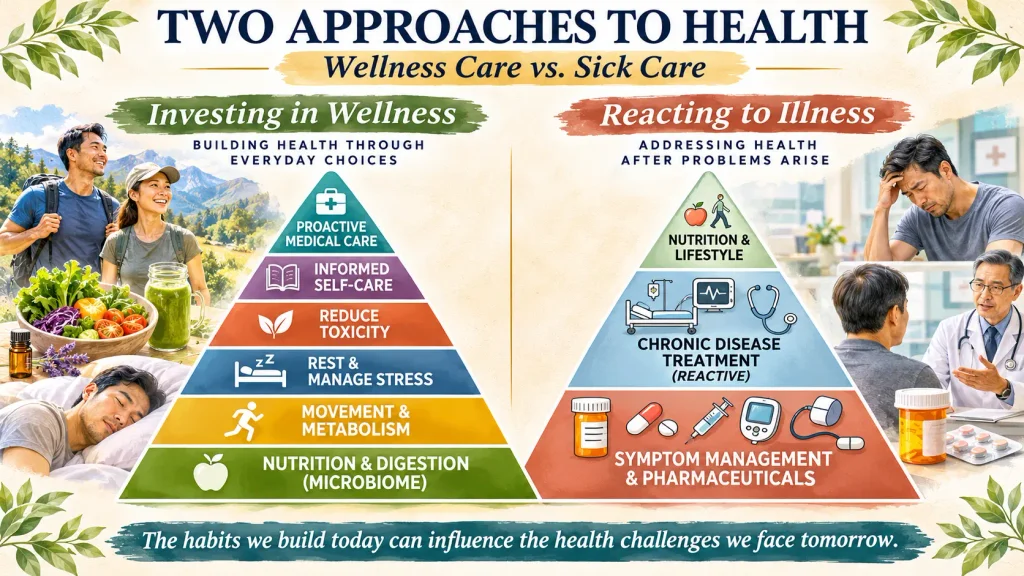
The Wellness Pyramid illustrates six important areas of health, beginning at the bottom and building upward:
- Nutrition & Digestion (Microbiome) — Nourishing the body and supporting digestive and microbial health.
- Movement & Metabolism — Staying active and supporting normal metabolic function.
- Rest & Manage Stress — Prioritizing sleep, recovery, and healthy stress management.
- Reduce Toxicity — Reducing unnecessary exposure to potentially harmful substances.
- Informed Self-Care — Understanding our health and making thoughtful decisions.
- Proactive Medical Care — Using preventive screenings, professional guidance, and appropriate healthcare.
The idea is simple: invest in your health through the choices you make every day.
Rather than waiting until something goes wrong, we can give attention to the things that help our bodies function well.
Eating nourishing foods, moving regularly, getting adequate sleep, and making healthier lifestyle choices may seem like small things individually. But over time, these habits can have a meaningful impact on our health.
The goal isn’t perfection. It’s consistency.
Sick Care: Responding After Problems Arise
Now consider a different approach.
Instead of beginning with daily wellness habits, much of our attention goes toward managing symptoms and treating health problems after they develop.
The Sick Care Pyramid illustrates this reactive approach through three levels:
- Symptom Management & Pharmaceuticals — Addressing symptoms and managing health concerns through medications and other interventions.
- Chronic Disease Treatment (Reactive) — Receiving ongoing treatment and medical support for established health conditions.
- Nutrition & Lifestyle — Giving comparatively less attention to everyday habits until health concerns prompt changes.
This doesn’t mean medications or medical treatments are bad. They can be necessary, effective, and even lifesaving.
The distinction is when and where we place our attention.
If we consistently neglect nutrition, physical activity, sleep, and other health-supporting habits, we may increase our risk of certain preventable health problems.
And when those problems develop, managing them can require significant time, effort, and resources.
Foundation Before Fix
Of course, healthy habits don’t guarantee that we’ll never get sick. Genetics, aging, environment, and circumstances all influence our health. Even people who take excellent care of themselves may need extensive medical treatment.
But there’s a meaningful difference between investing in our health every day and only thinking about it when something goes wrong.
We don’t have to choose between wellness care and medical care. Both matter, and appropriate preventive medical care should be part of a healthy routine.
The goal is to make caring for our health a regular part of life—not simply a response to illness.
And at the foundation of the Wellness Pyramid is something we do every day: nutrition and digestion.
That’s where we’ll begin.That’s where we’ll focus our attention.
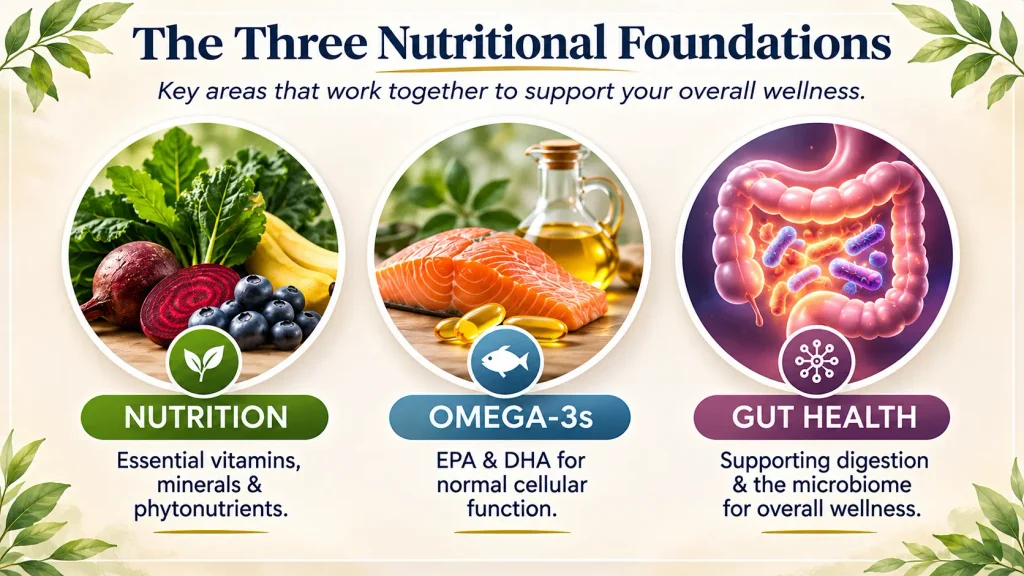
Nutrition: Giving Your Body What It Needs
Our bodies are constantly working, even when we aren’t thinking about it.
Cells produce energy. Enzymes help carry out chemical reactions. Tissues are maintained and renewed. Our bodies continually regulate countless processes that keep us functioning.
All of this requires nutrients.
Eating Enough Isn’t Always the Same as Getting Enough
We often think about food in terms of calories, carbohydrates, protein, and fat.
But vitamins, minerals, and other compounds found in food are important, too.
For example:
- B vitamins contribute to normal energy metabolism.
- Magnesium participates in hundreds of enzyme-related reactions.
- Vitamin C supports normal collagen formation and antioxidant protection.
- Zinc contributes to normal immune function and numerous cellular processes.
Plant foods also provide phytonutrients, including carotenoids and polyphenols, that researchers continue to study for their biological activities.
A varied, nutrient-rich diet is one of the best ways to obtain these compounds.
However, what we eat and what our bodies need aren’t always perfectly aligned.
Our food choices, dietary restrictions, life stage, and individual circumstances can all influence nutritional adequacy.
That’s one reason supplements may be useful: to help fill specific nutritional gaps rather than replace healthy eating.
Where VMG+ Fits In
doTERRA’s VMG+ was developed as a broad nutritional supplement combining vitamins, minerals, and plant-derived ingredients.
What interests us about VMG+ isn’t simply how many ingredients it contains.
It’s the thinking behind the formulation.
In doTERRA’s educational presentations, VMG+ is described through five areas: nutrition, superfoods, cellular support, biotransformation, and bioavailability.
These represent different considerations in supporting nutrition and normal biological processes.
One particularly interesting feature is its use of liposomal delivery technology.
Inside the Science: Why Liposomal Delivery?
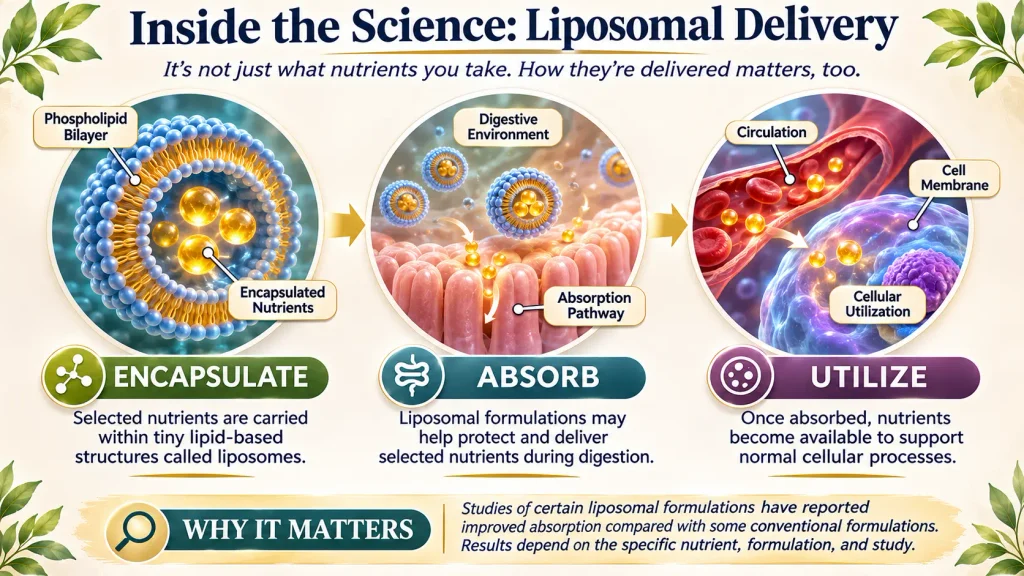
When we consume a nutrient, not all of it necessarily reaches circulation or becomes available for the body to use.
The form of the nutrient, our digestive environment, and the way an ingredient is delivered can influence absorption.
Liposomes are tiny structures formed from lipid layers, often using phospholipids. They can carry certain compounds and are studied for their potential to influence ingredient stability and delivery.
VMG+ incorporates liposomal technology for selected ingredients.
The idea is to consider not only which nutrients to include, but also how those nutrients are delivered.
Of course, liposomal technology doesn’t automatically mean every nutrient is better absorbed. That depends on the specific ingredient, formulation, and supporting research.
But it demonstrates an important principle:
Thoughtful supplementation involves more than choosing ingredients. How those ingredients are formulated matters, too.
That’s one of the things we appreciate about the approach behind VMG+.
Omega-3s: Why Essential Fats Matter
When people think about nutrition, vitamins and minerals often come to mind first.
But fats are important, too.
And not simply because they provide energy.
Fatty acids help form cell membranes and participate in various biological processes.
Among the most widely studied are omega-3 fatty acids.
Understanding EPA and DHA
Two particularly important omega-3s are eicosapentaenoic acid (EPA) and docosahexaenoic acid (DHA).
DHA is an important structural component of the brain and retina. EPA and DHA also participate in normal physiological processes, including those involving lipid signaling.
Omega-3s have been studied extensively in cardiovascular and metabolic health, although the benefits of supplementation depend on the dose, the individual, and the outcome being measured.
Fatty fish such as salmon, sardines, and mackerel are common dietary sources. Certain algae-derived supplements can also provide DHA and EPA.
But not everyone eats these foods regularly.
For someone whose diet provides relatively little EPA and DHA, supplementation may be a convenient way to increase intake.
Where EO Mega+ Fits In
doTERRA’s EO Mega+ was developed around essential fatty acids and a broader formulation approach.
In addition to marine omega-3s, the formula includes other fatty acids and botanical ingredients.
One interesting feature discussed in doTERRA’s presentations is its use of triglyceride-form omega-3s.
Omega-3 supplements can contain fatty acids in different chemical forms, and those differences can influence absorption under certain conditions.
However, the actual amount of EPA and DHA, product quality, and the individual’s needs remain important considerations.
EO Mega+ also includes wild orange essential oil as part of its formulation.
The combination reflects a distinctive approach to product development. Any additional health benefits from its botanical ingredients, however, need to be evaluated through evidence relevant to the specific formulation.
For us, EO Mega+ is interesting because it encourages us to look beyond the words “fish oil” on a label and ask better questions about what a supplement actually provides.
Inside the Science: What Is the Omega-3 Index?
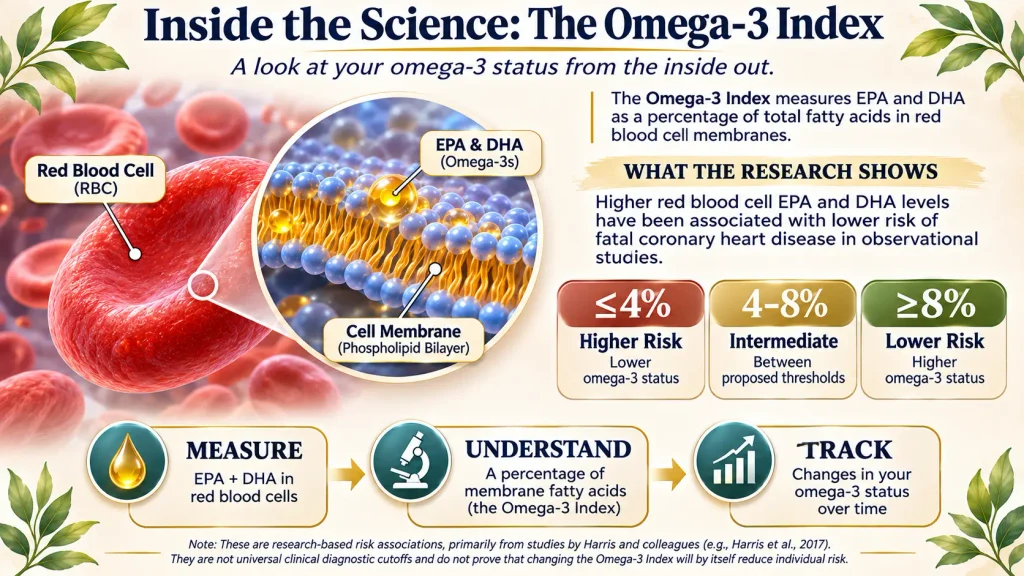
One of the more fascinating concepts in omega-3 research is the Omega-3 Index.
Rather than simply estimating how much fish someone eats, this test measures EPA and DHA as a percentage of the fatty acids in red blood cell membranes.
It provides an indicator of longer-term omega-3 status.
Researchers have studied associations between the Omega-3 Index and various health outcomes, particularly cardiovascular health.
The test doesn’t predict someone’s future health with certainty. But it shows how nutritional status can sometimes be assessed through measurable biological markers.
It’s a reminder that what we eat can influence the very structures that make up our cells.
Gut Health: More Than Digestion
Nutrition isn’t only about what we consume.
It’s also about what happens after we eat.
Inside our digestive tract lives a complex community of microorganisms known as the gut microbiome.
These microorganisms interact with our diet and participate in processes that our bodies cannot carry out entirely on their own.
Some help ferment dietary fibers. Others transform certain food compounds into metabolites.
Researchers are also exploring the microbiome’s relationship with immune function, metabolism, and communication between the gut and brain.
Think of Your Gut Like a Garden
One of our favorite ways to explain the microbiome is to compare it to a garden.
A healthy garden needs more than plants.
It needs suitable soil, nutrients, water, and an environment where different organisms can thrive.
Our gut microbiome is similar.
The foods we eat, medications we use, and other lifestyle factors can influence the microbial environment.
Fiber-rich foods and a variety of plant foods can help support beneficial microbial activity.
Certain fermented foods and probiotics may also play a role, depending on the individual and the specific microorganisms involved.
The goal isn’t simply to have the greatest number of bacteria possible.
It’s to support a functional microbial ecosystem.
Where PB Restore Fits In
doTERRA’s PB Restore takes a broader approach to microbiome support.
Rather than focusing exclusively on adding probiotic bacteria, the formulation incorporates several categories of ingredients related to microbial health.
These include:
- Probiotics: Live microorganisms that can provide health benefits when used in adequate amounts.
- Prebiotics: Substances selectively used by beneficial microorganisms that provide a health benefit.
- Postbiotics: Preparations of inanimate microorganisms and/or their components that confer a health benefit.
- Bacteriophages: Viruses that infect specific bacteria and are being studied for their potential applications in microbial ecosystems.
These ingredients have different functions, and including them in a supplement doesn’t automatically establish that the finished product will produce a particular benefit.
What makes PB Restore interesting to us is the effort to consider multiple aspects of the microbiome rather than simply focusing on a large probiotic count.
Inside the Science: Why a Dual-Chamber Capsule?
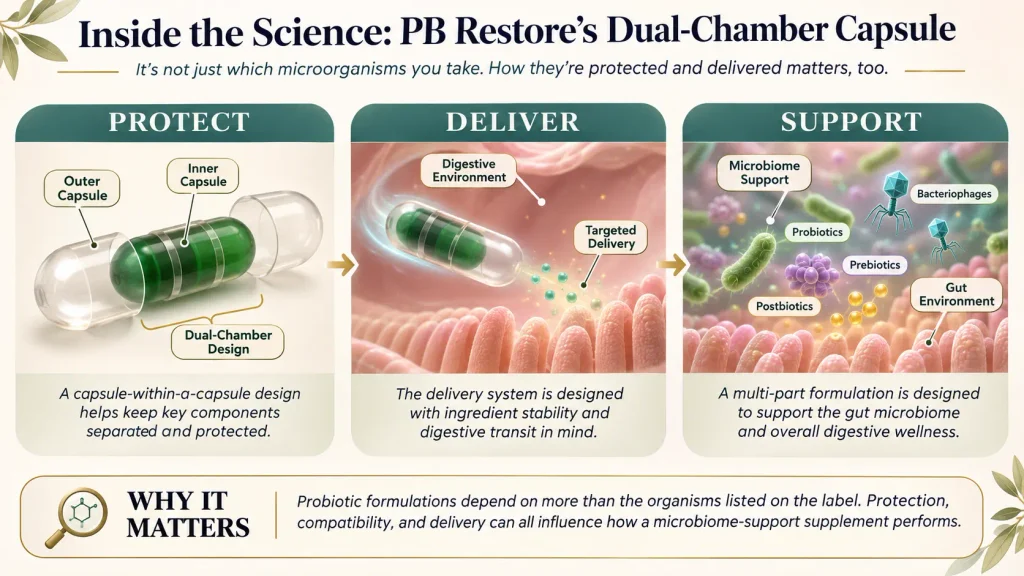
Probiotic organisms can be sensitive to moisture, temperature, and interactions with other ingredients.
This makes formulation and packaging important considerations.
PB Restore uses a dual-chamber capsule designed to address ingredient compatibility, protection, and delivery.
The design is an example of how supplement development can involve more than selecting ingredients.
Of course, the most important question is how the finished product performs. A sophisticated delivery system is meaningful when it provides a demonstrated advantage.
But understanding the rationale behind these decisions helps us appreciate the care that can go into developing a supplement.
How the Three Foundations Work Together
So why discuss nutrition, omega-3s, and gut health together?
Because our bodies don’t function as collections of completely separate systems.
Nutrients, fatty acids, digestion, and microorganisms all participate in an interconnected biological environment.
In one of doTERRA’s educational presentations, Dr. Alex DaBell explains this relationship using three memorable concepts.
Tools, Communication, and Transformation
Tools — VMG+
Vitamins and minerals help provide resources needed for normal cellular processes. Many act as cofactors that enable enzymes to perform essential reactions.
Communication — EO Mega+
Fatty acids contribute to cell membrane structures and participate in biological signaling. EPA and DHA are particularly interesting because of their roles in membrane composition and lipid-related physiology.
Transformation — PB Restore
Microorganisms possess enzymes capable of transforming dietary components into other compounds. This activity is part of the complex relationship between food and the gut microbiome.
These three concepts offer a helpful way to visualize how different nutritional considerations relate to one another.
They don’t mean everyone needs all three products or that the combination has been proven to produce greater benefits than the individual supplements.
Instead, they help explain why a foundational approach may consider more than one aspect of nutrition.
An Interesting Connection: Microbial Biotransformation
One particularly interesting topic discussed in doTERRA’s educational presentations is biotransformation.
This occurs when microorganisms use enzymes to chemically modify compounds.
For example, certain gut microorganisms can transform components of food into metabolites with different biological properties.
doTERRA has explored interactions between VMG+ and PB Restore in laboratory fermentation models.
This research is interesting because it investigates how nutritional ingredients and microbial communities may interact.
However, laboratory findings don’t necessarily establish that the same changes occur in people or produce measurable health benefits.
It’s an area worth following as research continues—and another reminder of how much we’re still learning about nutrition and the microbiome.
Building a Foundation You Can Maintain
With all this information, it’s easy to feel that wellness needs to be complicated.
But it doesn’t.
The goal isn’t to create the most elaborate routine possible.
It’s to build one that you can realistically maintain.
That might mean preparing more meals at home, eating a greater variety of plant foods, including omega-3-rich fish in your diet, moving regularly, or prioritizing sleep.
It also means keeping up with appropriate preventive medical care and understanding your individual needs.
Supplements can be part of that routine when they serve a meaningful purpose.
For some people, that might mean filling a particular nutritional gap. For others, it may mean choosing a convenient way to obtain nutrients they don’t consistently get through food.
VMG+, EO Mega+, and PB Restore represent three different approaches to nutritional support.
Understanding their ingredients, formulations, and research can help you decide whether any of them makes sense for your own routine.
And that’s ultimately what matters.
Foundation Before Fix
We don’t believe wellness should revolve around constantly searching for the next solution to a problem.
We believe it’s worth investing attention in the everyday habits that help us care for our bodies.
Not because we can guarantee perfect health.
But because our health influences how we experience life—our relationships, activities, responsibilities, and the things that give our lives meaning.
The science behind nutrition, essential fatty acids, and the microbiome is fascinating.
And the thought behind modern supplement formulations gives us even more to explore.
But the purpose of all that knowledge isn’t simply to understand more biology or collect more products.
It’s to make thoughtful choices about how we care for ourselves.
Start with the foundation. Build consistent habits. Learn what your body needs. And choose additional support with intention.
Let’s pursue wellness together.
Continue Exploring Foundational Wellness
Want to understand the science and formulation behind each product?
Explore our upcoming guides:
- VMG+ Explained: Micronutrients, Phytonutrients & Liposomal Delivery
- EO Mega+ Explained: Omega-3s, EPA, DHA & Thoughtful Formulation
- PB Restore Explained: Probiotics, Prebiotics & the Gut Microbiome
Educational note: This article provides general wellness and nutrition information, not individualized medical advice. Supplements are not intended to replace a balanced diet or appropriate medical care. Consult a qualified healthcare professional when appropriate for your health conditions, medications, or individual needs.
1 thought on “What is Foundational Wellness?”